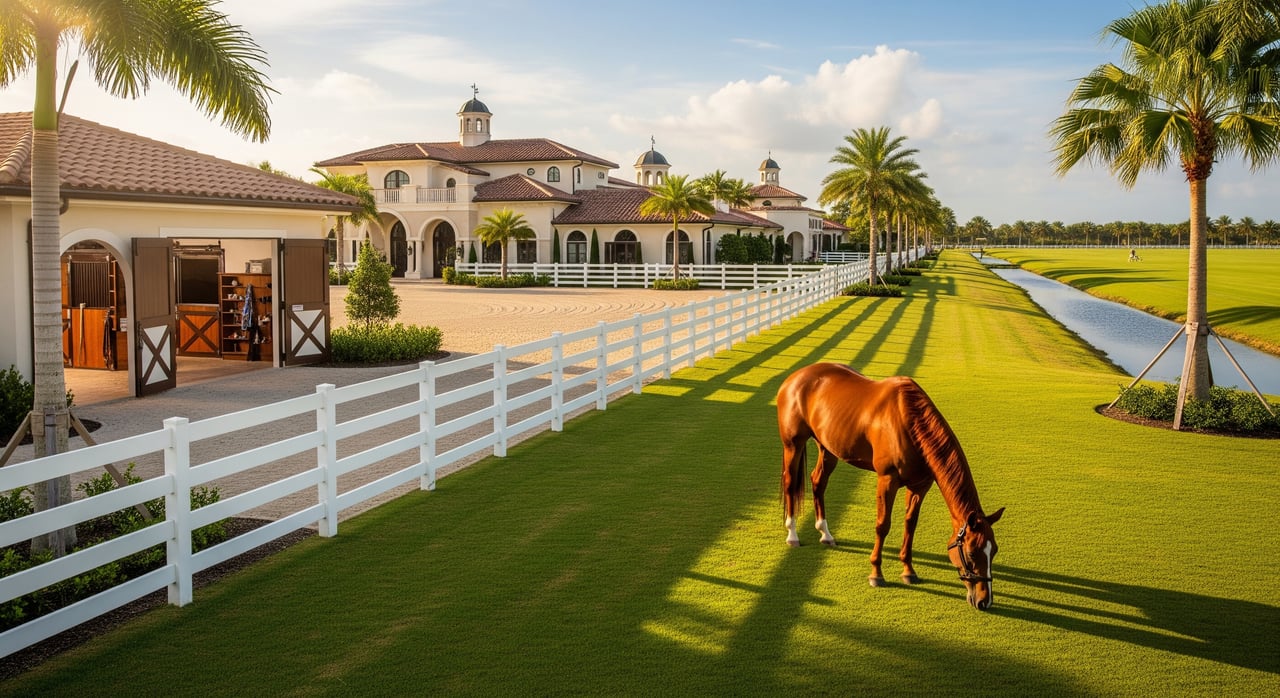
Shopping for a horse property in Wellington? You’re not alone. Each winter, riders, trainers, and owners from around the world make Wellington their competitive home base, which puts strong demand on barns, arenas, and equestrian amenities. If you want the right property for your horses and your lifestyle, you need a clear plan that balances facilities, zoning, and proximity to the show grounds. In this guide, you’ll learn how to compare property types, evaluate barns and footing, confirm the rules, and tour with confidence. Let’s dive in.
Why Wellington stands out
Wellington is one of the largest seasonal equestrian hubs in the world. The village hosts the Winter Equestrian Festival and the Adequan Global Dressage Festival, drawing international competitors, support teams, and equine service providers. That seasonal ecosystem creates a deep local network of vets, farriers, tack and feed suppliers, transporters, and specialized therapists.
The Village of Wellington plans with equestrian mobility in mind. Many neighborhoods offer bridle paths and horse-friendly streets, though access and rules vary by community and lot. Because codes and easements can change, it is smart to verify current municipal guidelines and neighborhood covenants before you make decisions.
Property types to consider
Equestrian estates
These are multi-acre parcels designed for serious horsekeeping. You often see private barns, multiple arenas, generous paddocks, and space for staff or guests. Estates can support training at home and quick access to show venues during the season.
Hobby farms and small acreage
Small-acreage properties, typically 1 to 5 acres, offer a more manageable setup. Expect a single barn, a sand schooling arena, and perimeter turnout. They are popular with riders who want on-site horses without running a full operation.
Barn-and-board investment properties
Some owners buy properties with multiple stalls to offer full or partial livery and training. This model can pair personal use with revenue, but it usually requires specific permits, inspections, and insurance designed for commercial operations.
Gated communities with equestrian allowances
Certain communities allow in-yard stables or provide access to shared boarding options. Amenities and rules differ by association, so you should confirm current covenants, stall limits, and trail use before you commit.
Living near the equestrian scene
You can also choose a non-equestrian home like a single-family residence or townhome near the show grounds and board off-site. This works well for buyers who want easy access to Wellington’s events and services without the daily upkeep of a barn.
Define your purpose and plan your search
Start by clarifying how you intend to use the property. Will you keep personal horses only, or operate a boarding or training business? The answer affects zoning, permits, insurance, and infrastructure.
- Personal use: Prioritize stall count, arena quality, turnout, and proximity to your preferred venues and trainers.
- Commercial operations: Check permitted uses, inspections, parking capacity for trailers, staff housing, and liability coverage requirements.
- Lease-back or off-site training: Some buyers purchase a residence and board or train elsewhere during the season. In that case, focus on travel times to venues and boarding facilities.
Barns and arenas: what matters most
Barn layout and operations
Evaluate stall count and size, flooring and mats, and aisle footing for safety and drainage. Good ventilation and natural light help reduce heat and humidity stress. Review tack and feed rooms, laundry space, wash racks, and hot water availability. Ask about electrical capacity for fans, heaters, and equipment, and confirm manure storage and haul-away practices.
Arena dimensions and footing
Arena quality can make or break your daily program. Ask about footing composition, irrigation systems, and how often the arena is dragged or harrowed. In South Florida’s rainy season, sub-surface drainage and run-off management are critical. If night work is on your schedule, check for reliable arena lighting.
Turnout, paddocks, and fencing
Inspect fencing materials and gate hardware for condition and safety. Look for adequate shelter and shade in paddocks. If you plan rotational grazing, confirm you have the space and layout to support it.
Site infrastructure and utilities
Confirm driveway width and turning radius for trailers and delivery trucks. Review parking capacity for busy days. Ask whether the property uses municipal water or a well, and confirm septic capacity based on your staff and guest count. Utility infrastructure should match your operational needs.
Specialty equipment and extras
Features like hot walkers, treadmills, solariums, and covered grooming bays can add value and convenience. Make sure electrical supply and drainage are set up for the equipment you plan to use.
Zoning, permits, taxes, and insurance
Zoning and permitted uses
Wellington and Palm Beach County zoning rules determine how many horses you can keep, whether commercial boarding or training is allowed, and what you can build or expand. Always verify the current code and the property’s legal use before you buy.
Agricultural classifications and property taxes
Florida offers agricultural classifications that can reduce property taxes for bona fide agricultural use. Eligibility varies by use and scale. Check with the Palm Beach County Property Appraiser and a tax advisor to see how your intended operation might qualify.
Permits, inspections, and environmental factors
Confirm permits and certificates of occupancy for barns, arenas, and additions. Ask about septic permitting, stormwater management, and any prior environmental reviews. Large equine operations may have manure handling or water quality requirements.
Insurance and hurricane exposure
You will need coverage for barns, equipment, and equine-related liabilities. Commercial training or boarding typically requires more robust policies than private use. Because South Florida faces hurricane risk, evaluate roof ratings, shutters, and fencing for wind exposure, and check insurance availability and cost early.
Utilities and operating costs
Water use can be significant for wash racks and arena irrigation. Confirm supply, capacity, and any irrigation rules. Septic limitations can restrict future expansions, so document system capacity and recent inspections.
Location and logistics
Proximity to show venues
The Palm Beach International Equestrian Center is the central competition hub for WEF, and many buyers look for properties within a 5 to 20 minute drive for daily convenience. Dressage riders often weigh proximity to AGDF as well. Shorter commutes during season can save time, reduce stress, and support a consistent training schedule.
Trails and bridle access
Wellington features bridle paths and equestrian-friendly routes in many neighborhoods, but access and rules vary lot by lot. Confirm recorded easements, HOA rules, and whether you can ride out directly or need to trailer to a trailhead or venue.
Transportation and airports
If you travel often or ship horses by air, consider drive times to Palm Beach International Airport and access to cargo or quarantine services. For day-to-day needs, make sure the route to major roads is trailer-friendly.
Nearby equine services
Proximity to veterinary clinics, farriers, feed and hay delivery, and tack suppliers is a major advantage, especially in peak season when schedules are tight. Ask sellers which vendors they use and how quickly emergency services can reach the property.
Your touring and inspection checklist
Use this quick list to organize your showings and pre-purchase inspections:
- Usage and history
- How long has the property housed horses? Any history of boarding or training?
- Reason for sale and any past neighbor disputes.
- Permits and documentation
- Permits and certificates of occupancy for barns, arenas, and additions.
- Maintenance records for arenas, irrigation, and footing. Any vendor warranties.
- Barn and stall specifics
- Stall dimensions, matting type, roof condition, ventilation, and aisle drainage.
- Evidence of pests, mold, or ammonia buildup.
- Arena and footing
- Footing composition, irrigation, drainage design, and maintenance schedule.
- Any re-surfacing history and details on materials used.
- Fencing and turnout
- Materials, line posts, gates, and repair history.
- Shade or shelter in paddocks and turnout rotation options.
- Utilities and water
- Municipal water or well, hot water for wash racks, and hose bib placement.
- Septic capacity, last inspection date, and staff or guest load.
- Storms and drainage
- Flood history, elevation, and stormwater plans for heavy rain events.
- Prior flooding incidents and mitigation measures.
- Logistics
- Trailer parking, driveway width and turning radius, and vendor access.
- Drive times to competition venues.
- Insurance and costs
- Recent insurance premiums and whether equine coverage was in place.
- Typical annual costs for arena care, footing, and staffing.
- Environmental and waste
- Manure storage, haul-away contracts, or composting setup.
- Neighbors and noise
- Proximity to other barns, typical training schedules, and seasonal activity patterns.
Line up the right team and financing
Specialized properties benefit from an experienced local team. Work with an agent who understands Wellington equestrian neighborhoods, an equine-savvy inspector, and an insurance broker familiar with equine operations and hurricane exposures. Add an equine veterinarian for herd planning, and a local attorney or title company to review easements, covenants, and permits.
On financing, make sure your lender and appraiser understand how to evaluate barns, arenas, and other improvements. Some lenders treat major equestrian facilities as outbuildings, while others require special appraisal approaches. Clarify these details early so your loan timeline and valuation expectations stay on track.
Plan for seasonality
Many Wellington owners are seasonal. If you plan to rent stalls or a guest house during show months, confirm local rules and licensing. Consider employee housing if you intend to operate year-round. Seasonal schedules also affect vendor demand, so secure service relationships before peak season when possible.
How Premiere Realty helps
Buying an equestrian property in Wellington is both exciting and complex. You deserve a tailored search that respects your riding program, budget, and timeline. Our team offers hands-on guidance, hyperlocal insight across Palm Beach County, and a modern search experience that keeps you informed at every step. We will help you clarify your use case, shortlist the right neighborhoods, coordinate specialized inspections, and negotiate with confidence.
Ready to explore Wellington equestrian communities with a dedicated local partner? Connect with the team at Premiere Realty, LLC to start a personalized search and touring plan.
FAQs
What makes Wellington unique for equestrian buyers?
- Wellington hosts major winter show circuits and offers dense access to trainers, vets, farriers, and tack and feed suppliers, creating a year-round equestrian ecosystem with strong seasonal momentum.
How close should I live to PBIEC during show season?
- Many buyers aim for a 5 to 20 minute drive to reduce daily stress, keep warm-up and show times flexible, and minimize shipping costs during the busiest weeks.
How do I confirm if boarding or training is allowed on a property?
- Verify current Wellington and Palm Beach County zoning for permitted uses, stall limits, and any conditions on commercial operations before you submit an offer.
What should I look for in arena footing in South Florida?
- Check footing composition, irrigation, and subsurface drainage, then review the maintenance schedule to ensure consistent performance through rain and heat.
Can agricultural classification reduce my property taxes?
- It can in some cases, but eligibility depends on bona fide agricultural use and local rules, so consult the Palm Beach County Property Appraiser and a tax advisor.
What insurance do I need for a training or boarding operation?
- Commercial operations typically require broader liability and property coverage than private use, plus attention to hurricane risk and wind mitigation features.
Do Wellington neighborhoods guarantee bridle path access?
- No. Trail access varies by lot and by community rules, so confirm recorded easements and HOA guidelines for each property you consider.